
Introduction
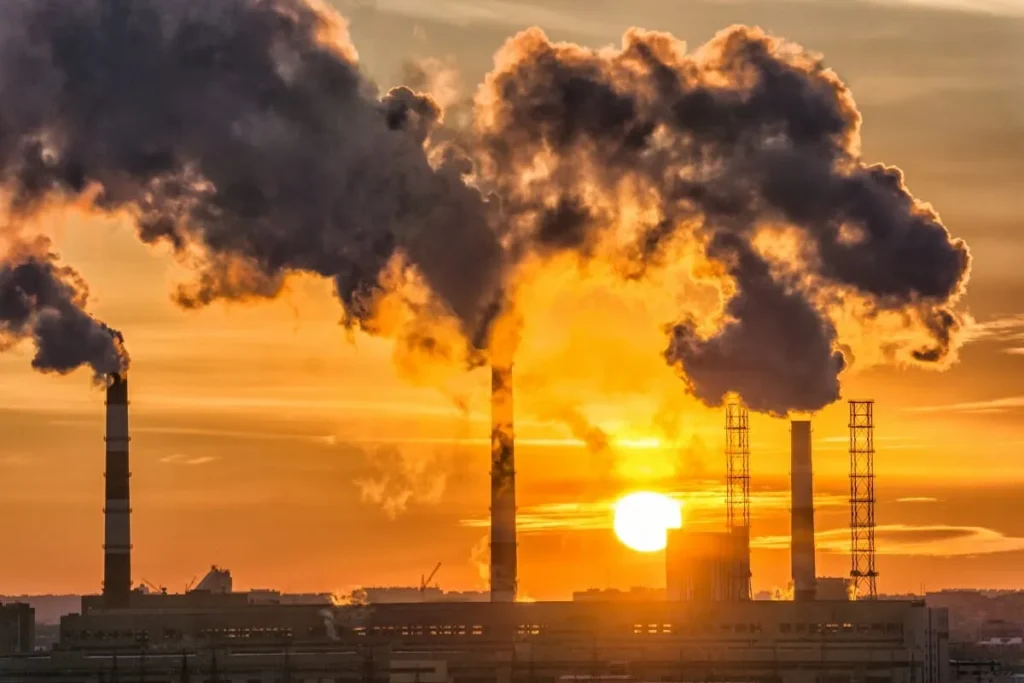
Environmental protection is one of the most critical challenges facing modern societies. Industrial growth, urbanization, and technological progress have improved living standards but also generated pollution, deforestation, and climate change—threats that transcend national borders and generations. Traditional market mechanisms often fail to account for environmental damage because many environmental goods—such as clean air, water, and biodiversity—are public goods that lack market prices.
Economists describe this problem as an externality, a situation where private actions impose costs or benefits on others that are not reflected in market transactions. Environmental law, therefore, serves as a crucial instrument to internalize externalities, align private incentives with social welfare, and promote sustainable development. This article explores the economic concept of externalities, the role of environmental law in correcting market failures, and the policy tools used to balance economic efficiency with ecological preservation.
Understanding Externalities
In economics, an externality occurs when the production or consumption of a good affects third parties who are not part of the transaction. Externalities can be negative (e.g., pollution, noise, deforestation) or positive (e.g., reforestation, renewable energy adoption).
A negative externality leads to overproduction because firms or individuals do not bear the full social cost of their actions. For instance, a factory discharging waste into a river imposes health and cleanup costs on nearby residents but does not pay for them. Conversely, positive externalities result in underproduction because private actors cannot capture the full social benefits of their activities.
Economists use the concepts of marginal private cost (MPC), marginal social cost (MSC), marginal private benefit (MPB), and marginal social benefit (MSB) to analyze these situations. Market equilibrium, based solely on private costs and benefits, often deviates from the socially optimal level of production. Environmental law seeks to close this gap by internalizing externalities—forcing polluters to consider the broader social costs of their actions.
The Economic Rationale for Environmental Law
The primary economic justification for environmental law is market failure. Markets allocate resources efficiently only when all costs and benefits are reflected in prices. However, environmental goods are often non-excludable and non-rivalrous—meaning no one can be excluded from using them, and one person’s use does not diminish another’s. This leads to the “tragedy of the commons,” where shared resources are overexploited because individuals act in their own self-interest.
For example, without regulation, fishermen may overharvest fish stocks, leading to depletion and long-term loss for all. Similarly, unregulated industries may emit pollutants freely because pollution disposal is cheaper than investing in cleaner technologies.
Environmental laws—such as emission standards, pollution taxes, and conservation acts—correct these inefficiencies by creating rules, incentives, and penalties that align individual behavior with social welfare. The goal is to achieve a socially optimal level of environmental quality, where the marginal benefit of pollution reduction equals the marginal cost of abatement.
Policy Instruments for Internalizing Externalities
Economists and policymakers have developed various legal and economic instruments to internalize environmental externalities. These can broadly be categorized as command-and-control regulations and market-based instruments.
1. Command-and-Control Regulations
These are traditional legal approaches that set specific limits or requirements for pollution control. Examples include emission standards, technology mandates, and environmental impact assessments.
For instance, a government might set a legal limit on the amount of carbon dioxide a factory can emit per year. Violations result in fines or shutdowns. While such regulations are straightforward and enforceable, they are often inflexible and costly. Firms with lower abatement costs have little incentive to exceed compliance, and the “one-size-fits-all” approach can stifle innovation.
Despite these drawbacks, command-and-control measures remain essential in cases where pollution poses severe or irreversible harm, such as toxic waste management or biodiversity protection.
Market-Based Instruments
Market-based instruments seek to harness economic incentives to achieve environmental goals more efficiently. These tools recognize that firms and individuals respond to prices and can find innovative ways to reduce pollution when given flexibility.
Pigouvian Taxes
Named after economist Arthur Pigou, these taxes impose a fee equal to the marginal external cost of pollution. For example, a carbon tax makes emitting greenhouse gases more expensive, encouraging firms to adopt cleaner technologies. Economically, Pigouvian taxes align private costs with social costs, leading to efficient outcomes. However, accurately estimating the true social cost of pollution remains challenging.
Tradable Permits (Cap-and-Trade Systems)
Under this system, the government sets a total pollution cap and distributes or auctions emission permits to firms. Companies that can reduce emissions cheaply may sell their excess permits to others, creating a market for pollution rights. The European Union Emissions Trading System (EU ETS) and California’s cap-and-trade program exemplify this approach. Tradable permits combine environmental certainty (through fixed caps) with economic efficiency (through trading flexibility).
Subsidies and Incentives
Governments may also offer subsidies for renewable energy, electric vehicles, or reforestation. These positive incentives encourage behaviors that generate environmental benefits, internalizing positive externalities. For instance, tax credits for solar panels increase the adoption of clean energy by lowering costs for consumers.
Liability Laws
Liability rules, such as those under tort law, make polluters financially responsible for environmental damage. When enforced effectively, these laws encourage firms to minimize risks and internalize potential external costs preemptively.
The Coase Theorem and Property Rights
Economist Ronald Coase (1960) offered an alternative solution to externalities through well-defined property rights. The Coase Theorem posits that if property rights are clearly assigned and transaction costs are low, affected parties can negotiate privately to achieve an efficient outcome without government intervention.
For example, if a farmer and a factory can bargain over pollution rights, they may reach an agreement that maximizes joint welfare. However, in reality, environmental problems often involve high transaction costs, numerous stakeholders, and diffuse impacts (e.g., global climate change), making private bargaining impractical. In such cases, government regulation remains necessary to coordinate collective action and enforce accountability.
Global Environmental Externalities
Many environmental externalities are transboundary or global in nature. Issues such as climate change, ozone depletion, and ocean pollution cannot be effectively addressed by national laws alone. These require international cooperation and legal frameworks.
The Paris Agreement (2015) under the United Nations Framework Convention on Climate Change (UNFCCC) exemplifies a global effort to internalize carbon externalities through national commitments to emission reduction. Similarly, the Montreal Protocol (1987) successfully curtailed ozone-depleting substances, demonstrating how coordinated international regulation can produce efficient environmental outcomes.
However, global agreements face challenges such as free-riding—countries benefiting from others’ efforts without contributing proportionately—and enforcement difficulties due to sovereignty concerns.
Balancing Economic Growth and Environmental Protection
One of the central dilemmas in environmental law and economics is balancing economic growth with environmental sustainability. Developing countries, in particular, argue that strict environmental regulations may hinder industrialization and poverty reduction. Economists respond by emphasizing the Environmental Kuznets Curve (EKC) hypothesis, which suggests that environmental degradation initially worsens with economic growth but improves once societies reach higher income levels and can afford cleaner technologies.
Thus, environmental laws should be designed to promote green growth—economic expansion that decouples resource use and emissions from development. Policies such as carbon pricing, green innovation subsidies, and sustainable urban planning can help achieve this balance.
Challenges in Implementation
Despite strong economic reasoning, environmental law faces several implementation challenges:
- Information asymmetry – Governments may lack data on pollution sources or damage levels, making regulation difficult.
- Enforcement costs – Monitoring and compliance require administrative resources and institutional capacity.
- Political resistance – Industries and interest groups often oppose environmental taxes or regulations.
- Equity concerns – Environmental policies may disproportionately burden low-income households unless complemented by compensatory measures.
Addressing these challenges requires a combination of economic analysis, transparent governance, and public participation in environmental decision-making.